
Split
Stay quiet, don't burn: my vanishing self

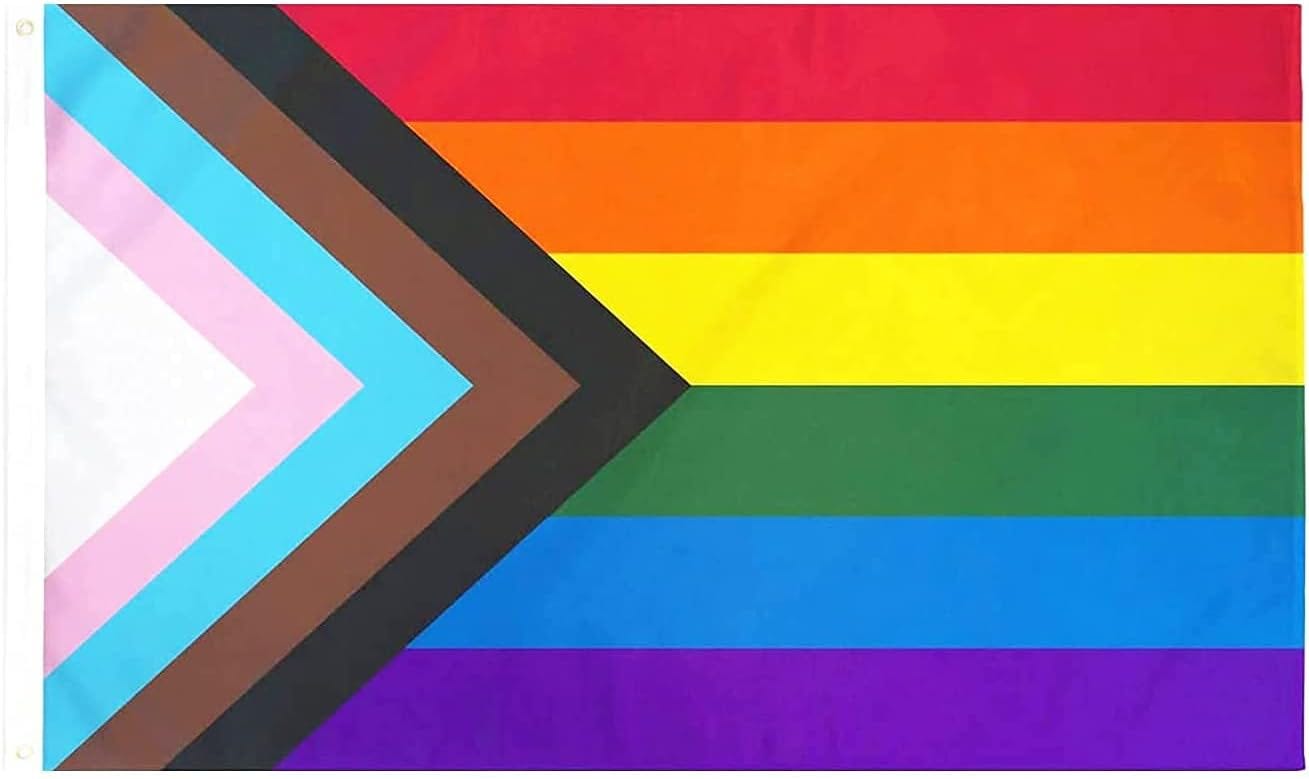
I grew up bisexual in the 90s, which meant I didn’t grow up bisexual.
I grew up splitting myself in half.
Church was a constant.
Not always screaming. Not always dramatic (though some were and still are, you can hear them talking about gays causing hurricanes).
But steady, repeated messaging:
Being gay isn’t the problem—
as long as you don’t act on it.
That sentence sounds gentle.
It isn’t.
It teaches you this:
You are allowed to exist, but not to live.
And it taught me something even more sinister—something that sits underneath the idea of “original sin”:
Hate yourself. You aren’t okay as you are.
Because if you believe that, you’ll do anything to fix it.
You’ll stay.
You’ll obey.
You’ll pay.
And they’ll call that salvation.
I learned early how to edit myself.
What to say.
What not to say.
Which parts of me were “safe” enough to be seen.
Because if it’s a choice, then it’s your fault.
If you act on it, you’re choosing wrong.
If you feel it, you’re already suspect.
So I learned to split.
I was fifteen the first time it broke me in a way I couldn’t explain.
A boy I liked broke my heart.
And a girl I liked broke my heart.
On the same day.
I could talk about one of them.
I could cry about the boy.
My friends understood that. They showed up for that.
But the girl?
She didn’t exist.
Not in conversation.
Not in grief.
Not in the version of me I was allowed to be.
So I carried one heartbreak out loud—
and buried the other alive.
That’s what people don’t understand about growing up like this.
It’s not just that you’re hiding.
It’s that you’re grieving things
you’re not even allowed to name.
And it wasn’t just church.
There’s this idea now that the LGBTQ community has always been a refuge.
For a lot of people, it is.
But being bisexual in the 90s didn’t always fit there either.
You were too much for one world,
and not enough for the other.
Too straight to be trusted.
Too gay to be accepted.
Like you hadn’t picked a side.
Like you were temporary.
And history mattered.
The AIDS crisis in the 80s shaped everything—fear, loss, activism, identity. Gay communities were fighting to survive.
Bisexual women weren’t centered in that fight.
We weren’t the ones people were organizing around.
We weren’t the ones dying in those numbers.
So when the community formed in response to that trauma, we were…adjacent.
Not fully inside it.
Not fully claimed by it.
So I split again.
At church, I hid to be good.
In queer spaces, I hid to be believed or just didn’t join.
There wasn’t a version of me that didn’t require editing.
Eventually, I fell in love with a woman.
And I hid it.
From my friends.
From my world.
From myself, sometimes.
Because there wasn’t a version of my life where both things could exist:
the girl people accepted
and the girl I actually was
So I built two.
And maintaining that split didn’t make me safer.
It made me lonelier.
There’s a specific kind of isolation that comes from participating in your own invisibility.
Smiling in rooms where you are only half there.
Nodding along to conversations that quietly erase you.
Carrying something real and alive while pretending it doesn’t exist.
It doesn’t feel like rebellion.
It feels like survival.
It took me years of therapy to undo what was called “guidance.”
To separate morality from control.
To understand that love doesn’t need permission.
To grieve the version of myself that learned to disappear to belong.
Because that’s what that messaging does.
It doesn’t just limit behavior.
It teaches self-rejection as a virtue.
I’m not split anymore.
But I remember her—
fifteen, heartbroken twice in one day,
only allowed to mourn half of it.
She thought being loved meant being less.
She was wrong.
But she didn’t stand a chance.
And I write for her now.
Out loud.
Where she was never allowed to be.
Today’s mood (one of the best shows ever!): "Gettin' Bi" (feat. Pete Gardner) - "Crazy Ex-Girlfriend"
Thank you for sharing this! It's unfortunately all too relatable for those who grew up in church and are in the lgbtq community.
Ps: just subscribed because I'm always looking for more lgbtq writers on my feed!
This hits close to home. Thanks for writing it.