
When Rights Stop Feeling Permanent
On growing up believing America widened during my life and wondering if it still will

I grew up believing that certain fights in America, while imperfect, had at least been settled.
Not solved.
Not healed.
But settled enough that we understood why the protections existed.
The Voting Rights Act.
Roe v. Wade.
Basic civil rights protections.
The idea that the government should move carefully when limiting personal autonomy or access to representation.
I don’t think everyone agreed on the details even then.
But I thought there was still a shared understanding that these protections came from somewhere painful.
That they were written in response to real suffering.
I grew up in Arkansas in the 1990s during the rise of Bill Clinton.
And for all of his flaws — and I think history has shown he had serious flaws as both a husband and a man — there was still a feeling in parts of the South then that the country might slowly become more open rather than more closed.
More complicated.
More diverse.
More willing to confront difficult truths.
Not perfect.
Not remotely perfect.
But moving, however unevenly, toward inclusion instead of retreat.
I think that shaped me more than I realized at the time.
Because growing up queer, bookish, scientifically minded, and painfully aware of social hierarchies in a conservative Southern environment, I carried this hope that America was gradually widening.
That maybe each generation would have to fight less hard to exist openly than the one before it.
I remember one conversation years ago with someone I cared about deeply.
He had grown up Catholic but no longer really believed in it himself. His parents still did.
And at one point he said something like:
“I know it hurts people like you, but I don’t want to challenge them because they’re old.”
I don’t think he meant it cruelly.
In his mind, he was trying to avoid conflict.
Trying not to hurt his parents.
Trying to keep the peace.
But I remember sitting there realizing something that would stay with me for years afterward:
My rights would always feel more theoretical to him than his discomfort.
My life was the abstraction.
His comfort was the reality.
And I think that’s part of what many minorities, women, and LGBTQ people are trying to explain right now.
For some people, these debates are intellectual.
Constitutional.
Philosophical.
For others, they determine whether you feel fundamentally safe, visible, protected, or disposable inside your own country.
That difference in emotional stakes changes everything.
So part of what feels disorienting now is not simply political disagreement.
It’s the feeling that some of the protections and assumptions that formed the emotional backdrop of my generation are no longer stable in the way we thought they were.
When I look at recent court decisions, I understand that many conservatives see them differently than I do.
Some see Roe as judicial overreach.
Some see voting-rights rulings as correcting outdated formulas or reducing race-based governance.
Some genuinely believe these decisions strengthen constitutional consistency rather than weaken democracy.
I want to say clearly:
I do not believe everyone who supports these rulings is hateful.
In fact, I think one of the biggest mistakes we make in this country is assuming disagreement automatically means malice.
But I also think many people who are frightened right now are not being irrational.
Because from where they stand, the pattern feels cumulative.
The Voting Rights Act weakened.
Roe overturned.
Book bans expanding.
LGBTQ protections debated state by state.
Growing political rhetoric about who counts as a “real” American.
A general open hostility toward institutions unless they produce the “correct” outcome.
At a certain point, people stop experiencing these as isolated policy disagreements and start experiencing them as instability.
As uncertainty.
As a question:
Which rights are considered permanent — and whose rights were only temporary all along?
Yours?
Mine?
I think what scares many women, minorities, LGBTQ people, and other marginalized groups is not simply one ruling.
It’s the feeling that rights can become negotiable once political power shifts enough.
And history makes that fear difficult to dismiss entirely.
The United States has done extraordinary things. I fucking love it here.
But we have also repeatedly restricted rights first and apologized later.
That’s part of our history too.
I know some conservatives get frustrated hearing comparisons to authoritarianism.
I understand why.
Most conservatives I know do not see themselves as authoritarian.
Many believe they are protecting order, stability, tradition, or constitutional limits.
And honestly, I think reducing half the country to caricatures is dangerous for all of us.
I’m not perfect, I’ve done it myself at times when I’ve been very emotional, like about the generation of girls under me losing their right to their body, their potential for earning, and their dependence on unsafe men and broken systems of protection.
But I also think democracies rarely erode all at once.
Usually the changes arrive legally.
Procedurally.
One ruling at a time.
One emergency at a time.
One exception at a time.
One “this probably won’t affect most people” at a time.
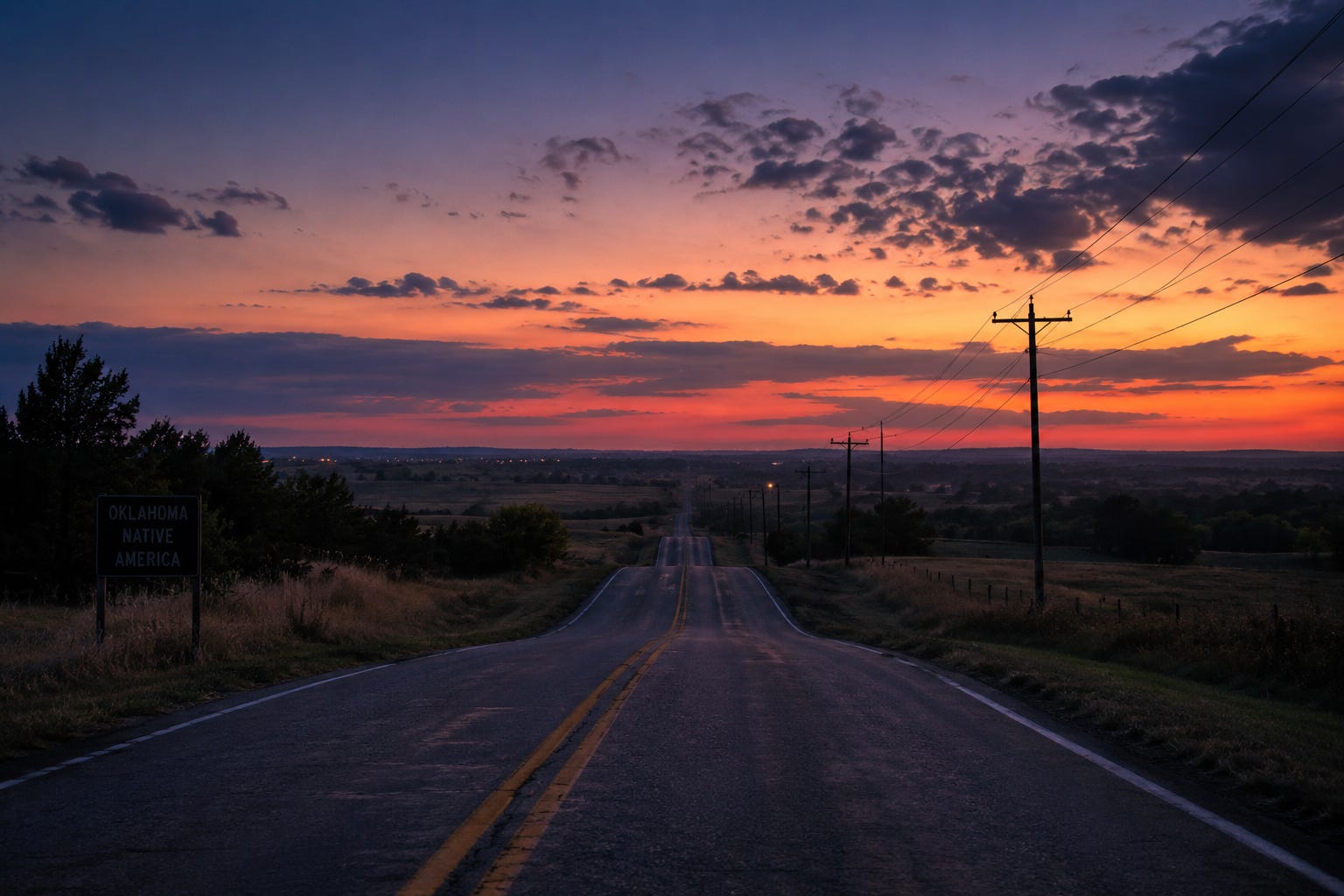
Until suddenly people realize the ground beneath them moved while everyone argued about whether movement was happening at all.
Maybe I’m wrong.
I hope I’m wrong.
I would genuinely rather be accused of overreacting than wake up ten years from now realizing the warning signs were easier to see than we wanted to admit.
I don’t want revenge on conservatives.
I don’t want humiliation for liberals.
I don’t want endless cultural warfare where every election feels existential.
I want a country where rights feel durable enough that losing one election does not make entire groups of people fear for their bodily autonomy, representation, safety, or future.
And I think the fact that so many people do feel that fear right now should matter — even to those who disagree with them politically.
A song for my country: Taylor Swift - Out Of The Woods (Lyrics)
Jamie, the sentence about your rights feeling more theoretical to him than his discomfort gives this essay its moral center. You name the difference between experiencing rights as an abstract debate and experiencing them as the ground beneath one’s safety, autonomy, belonging, and future. I also appreciate the care you take to resist caricature, because that restraint makes the fear you are naming harder to dismiss as mere partisanship. Thank you for giving language to the disorientation many feel when protections they were taught to regard as durable begin to feel conditional.
"It’s the feeling that rights can become negotiable once political power shifts enough." 💯 Drives me up the walls. Thanks for writing!